✨ New Arrivals Just Dropped!Explore
HomeStore

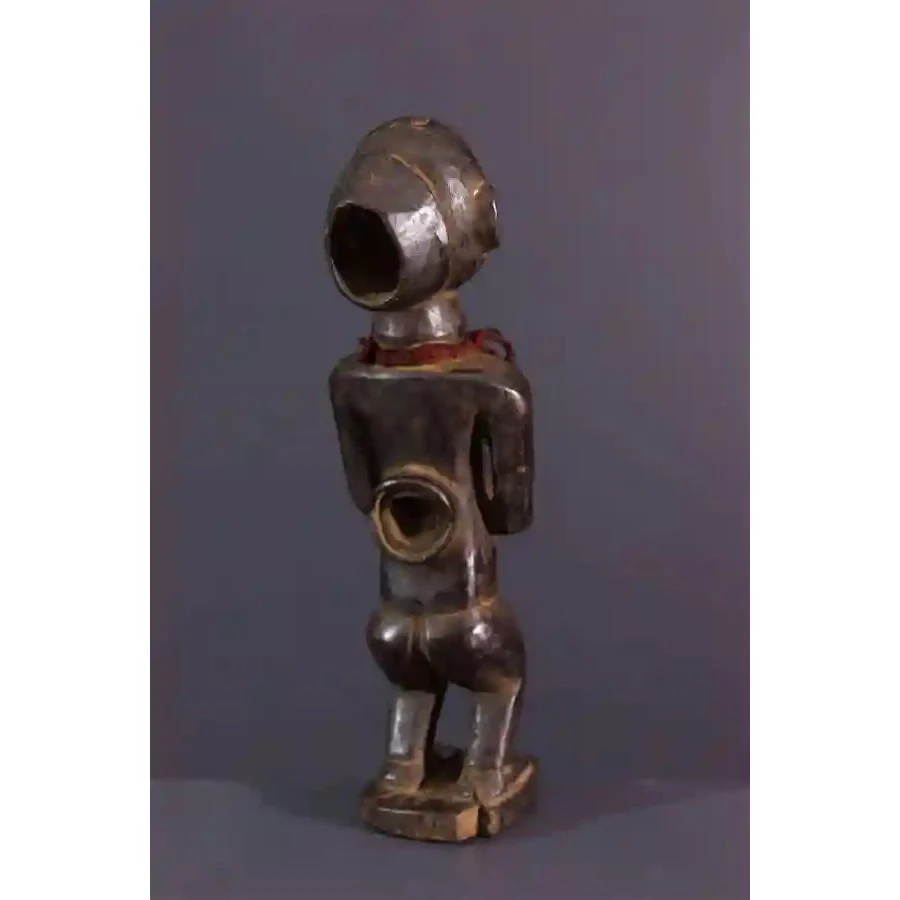
Luba Female Fetish Figure, Congo #511

Product image 1
Product image 2
Product image 3
Product image 4
Product image 5
Product image 6
Product image 7
Product image 8
Product image 9
Product image 10
Product image 11
Product image 12
Product image 13

Luba Female Fetish Figure, Congo #511

  • Luba Female Fetish Figure, Congo #511
  • Date/Period: Second half 20th century
  • Materials: Wood, fabric
  • Dimensions: 10.24"
  • Note: Stand not included.
  • According to some Lubas, however, although a woman, she would represent the first Luba diviner, and would also be an allegory of royalty linked to the powerful Mbudye society associated with royal power. ("Luba" Roberts.) The Lubas (Baluba in Chiluba) are a people of Central Africa. Their cradle is Katanga, more precisely the region of the Lubu river, thus the name (Baluba, which means “the Lubas”). They were born from a secession of the Songhoy ethnic group, under the leadership of Ilunga Kalala who killed the old king Kongolo who has since been revered in the form of a python. In the 16th century they created a state, organized as a decentralized chiefdom, which stretched from the Kasai River to Lake Tanganyika. The chiefdoms cover a small territory without any real border which includes at most three villages.
  • $675.00
    Luba Female Fetish Figure, Congo #511
    $675.00

    Product Information

    Shipping & Returns

    Description

  • Luba Female Fetish Figure, Congo #511
  • Date/Period: Second half 20th century
  • Materials: Wood, fabric
  • Dimensions: 10.24"
  • Note: Stand not included.
  • According to some Lubas, however, although a woman, she would represent the first Luba diviner, and would also be an allegory of royalty linked to the powerful Mbudye society associated with royal power. ("Luba" Roberts.) The Lubas (Baluba in Chiluba) are a people of Central Africa. Their cradle is Katanga, more precisely the region of the Lubu river, thus the name (Baluba, which means “the Lubas”). They were born from a secession of the Songhoy ethnic group, under the leadership of Ilunga Kalala who killed the old king Kongolo who has since been revered in the form of a python. In the 16th century they created a state, organized as a decentralized chiefdom, which stretched from the Kasai River to Lake Tanganyika. The chiefdoms cover a small territory without any real border which includes at most three villages.